

 by Kripal Homes
PG Full Form in Hostel: What Does PG Stand For in Student Housing?
The full form of PG in hostel is Paying Guest.
When searching for accommodation near colleges, universities, or corporate business parks, the terms “Hostel” and “PG” are frequently grouped together. Understanding the exact meaning of the acronym, why it is attached to the word “Hostel,” and how it works legally and financially ensures you choose the right place to live.
What Does PG Mean in Hostel Terms?
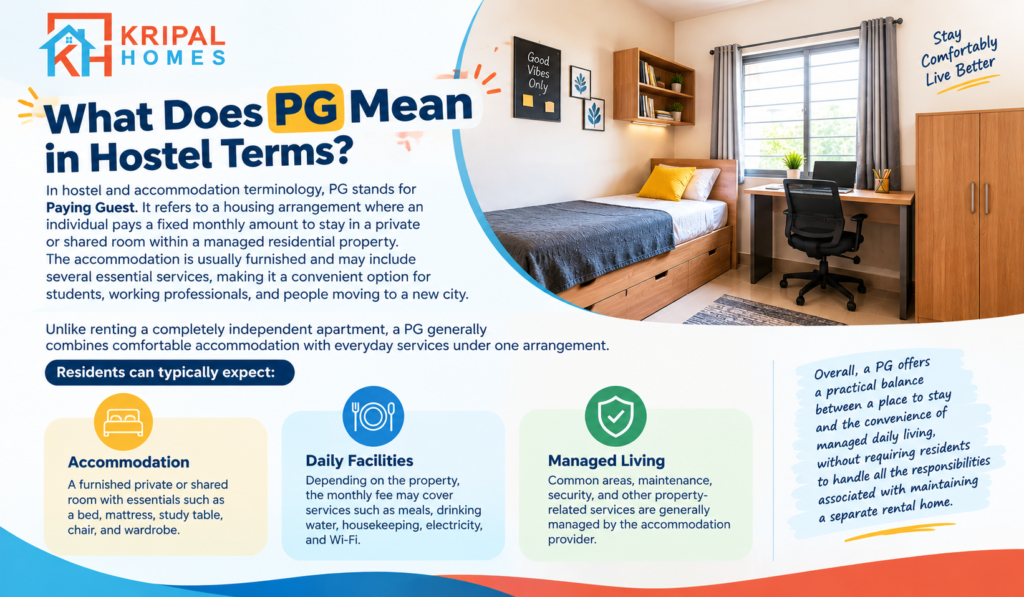
In housing terminology, a PG (Paying Guest) is an individual who pays a monthly fee to occupy a room or a single bed inside a managed residential facility.
Unlike traditional dormitories or self-maintained rental apartments, a PG setup functions as a hybrid accommodation system:
-
Boarding (The Room): Furnished living space with a bed, study desk, mattress, and personal wardrobe.
-
Lodging (Daily Services): Bundled daily needs including prepared meals, water supply, room housekeeping, and high-speed Wi-Fi.
Why Do People Call It “PG Hostel”?
Many private operators use the hybrid term “PG Hostel” to market their facilities:
-
Hostel Concept: It houses multiple students or young professionals under a shared community structure with house rules, common lobbies, and security personnel.
-
PG Concept: Unlike an institutional or government university hostel, private management handles cooking, cleaning, laundry, and daily maintenance in exchange for a consolidated fee.
Therefore, “PG in hostel” simply means private, managed paying guest housing designed specifically for students and young working individuals.
Key Differences: PG vs. Institutional Hostel
While both provide temporary shared accommodation, their operational setups are distinctly different:
| Comparison Point | PG (Paying Guest) | Traditional / College Hostel |
| Full Meaning | Paying Guest | Hostel / Communal Dormitory |
| Who Manages It? | Private property owners or co-living firms | Educational institutes or universities |
| Room Occupancy | Single, Double, or Triple sharing options | Mostly 3 to 6 students per dormitory |
| Food Arrangements | Fixed menu with local options, flexible plans | Institutional mess menu with rigid schedules |
| Daily Housekeeping | Routine cleaning inside bedrooms and washrooms | Focus primarily on hallways and common areas |
| Gate Restrictions | Moderate timings with digital or logbook entries | Strict curfew hours with manual roll calls |
| Eligibility | Open to students, trainees, and working professionals | Exclusively enrolled students of that institution |
What Facilities Are Covered Under a Paying Guest (PG) Setup?
When you pay for a PG accommodation, your monthly rent typically covers the following infrastructure:
-
Furnished Living: A bed frame, mattress, locked wardrobe, study table, chair, and basic lighting fixtures.
-
Meal Services: Catered hot meals (breakfast and dinner on weekdays, with additional lunch service on weekends).
-
Utility Coverage: High-speed internet access, continuous municipal or borewell water supply, and inverter/generator power backup.
-
Maintenance & Cleanliness: Regular floor sweeping, mopping, and periodic bathroom sanitization managed by on-site staff.
-
Premises Security: External CCTV coverage, visitor screening, and round-the-clock security guards or resident wardens.
Room Sharing Types and Cost Factors
The pricing of a paying guest room depends primarily on your choice of privacy:
-
Single Occupancy PG: A private room for one individual. This offers complete privacy for studying or remote work, making it the most expensive tier.
-
Double Sharing PG: A single room shared between two occupants with separate single beds. This is the most popular setup, providing a functional balance between affordability and comfort.
-
Triple Sharing PG: A shared room for three individuals. This represents the most economical tier, preferred by university students seeking to minimize monthly overheads.
Additional Costs to Clarify in Advance
-
Air Conditioner Electricity: Check if the room has an individual electricity sub-meter, where power consumption is billed separately from the base rent.
-
Security Deposit Terms: Verify the deposit amount (usually 1 to 2 months’ rent) and ensure the exit deduction policies are stated clearly in writing.
-
Notice Period: Most PG setups enforce a 30-day written notice requirement prior to vacating.
Essential Checklist Before Finalizing a PG
-
Verify Document Requirements: Keep copies of your government ID (Aadhaar or Passport), student ID, or employment letter ready for local police verification.
-
Check Mobile Connectivity: Step inside your designated bedroom during your visit to verify reliable mobile signal reception and cellular data strength.
-
Inspect Water and Power Infrastructure: Test the hot water geyser, bathroom taps, and confirm the availability of power backup during local outages.
-
Review Written Terms: Ensure all financial terms, lock-in periods, and meal schedules are clearly documented in a physical or digital tenancy agreement.
Frequently Asked Questions About PG Full Form
What is the full form of PG?
The full form of PG is Paying Guest. It refers to an accommodation arrangement where an individual rents a room or bed with essential food and housekeeping services included in the rent.
What is the difference between a PG and a tenant?
A regular tenant leases an entire apartment, takes legal possession, cooks independently, and manages utility bills directly. A paying guest rents only a room or a bed inside a shared property, with daily meals, housekeeping, and utilities bundled into the package.
Can both students and working professionals stay in a PG?
Yes. Paying guest accommodations cater extensively to college students, interns, and corporate professionals seeking ready-to-move-in housing without long-term leasing commitments.
Is food compulsory in a paying guest accommodation?
Not always. Many modern PG accommodations offer “lodging-only” plans that allow residents to pay solely for the room while managing their meals externally.


